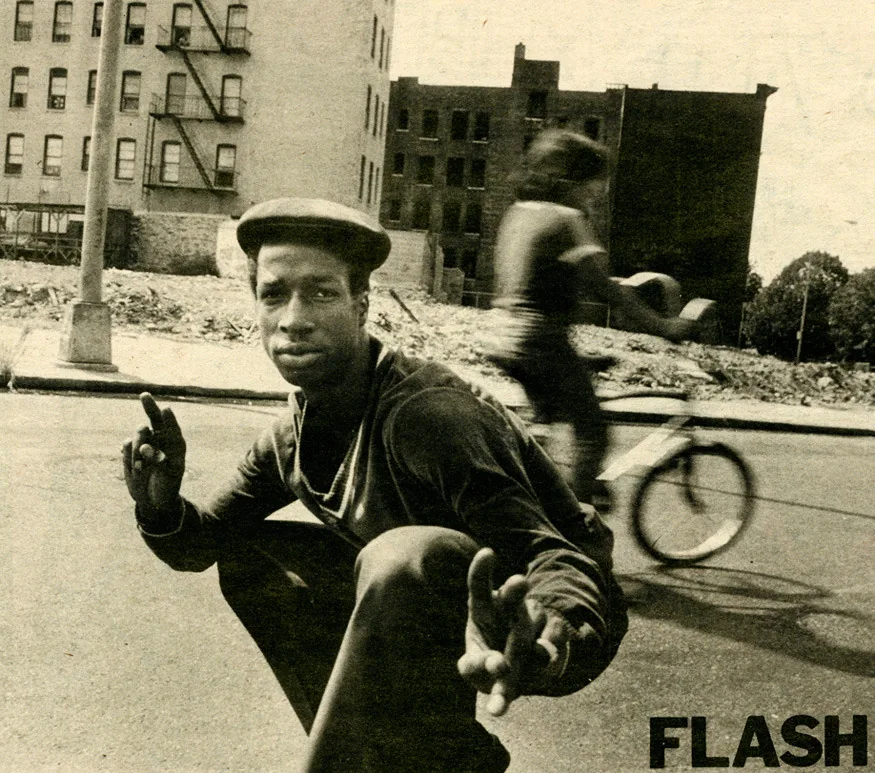
Grandmaster Flash, crouched on the pavement in a newsboy cap, fronted a 1981 NME feature whose headline was lifted straight from a Blondie record: “Flash Is Fast, Flash Is Cool.”
Debbie Harry had dropped that line into “Rapture,” name-checking him alongside Fab 5 Freddy. In March 1981 it became the first U.S. No. 1 hit on the Billboard Hot 100 to feature rap vocals. A downtown rock band put a Bronx DJ’s name on pop radio before most of the country had ever heard him play.


The Quick Mix Theory
Flash had earned it in his bedroom. Born Joseph Saddler, he learned to repair electronics at Samuel Gompers, a Bronx vocational high school, and spent years working out what he called the Quick Mix Theory: two copies of the same record, looping a drum break back and forth. His fix for finding the break without lifting the needle was the Clock Theory. He marked the spot on the label with a Magic Marker and spun the record back one or two revolutions. He has called it one of his contributions that all DJs still use. When he first played it in the parks, he said, “a lot of people ridiculed it.”
The Message
The twist came a year later. “The Message” carries his group’s name, but Flash had nothing to do with it. Sugar Hill session musician Ed “Duke Bootee” Fletcher wrote most of it and co-produced it with Jiggs Chase, and Melle Mel was the only member of the Furious Five who worked on it. Fletcher said Flash didn’t think people wanted to hear a song that dark. In 2007, Grandmaster Flash and the Furious Five became the first rap group inducted into the Rock and Roll Hall of Fame.

Comments